
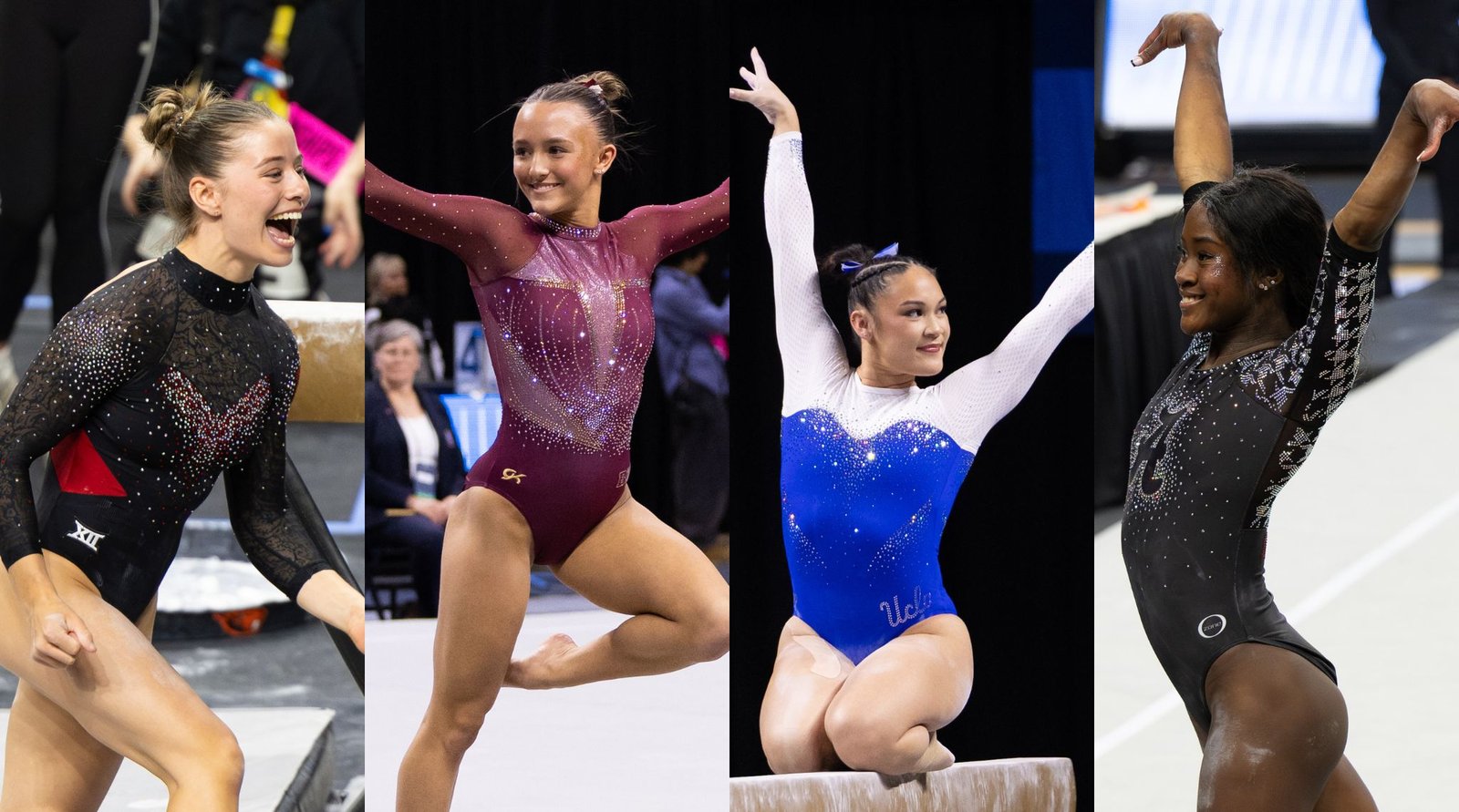
The Corvallis Regional is where it all goes down. Two more tickets to Forth Worth and four teams that are realistically capable of securing a spot. Grab your popcorn — this is going to be a good one!
At 8 p.m. ET on ESPN+ No. 4 UCLA, No. 5 Alabama, No. 12 Utah and No. 13 Minnesota will face off to claim the final two tickets to Fort Worth.
A snapshot of history: UCLA is a team that fans have come to expect to see at the NCAA Championships. They’ve only missed out on four appearances in the last 28 years, although three of those came in the last five years. Alabama has only missed two in the last 28 years (2019 and 2023). Utah has NEVER missed the NCAA Championships. How’s that for a stat? Minnesota is the only team in the final that isn’t a consistent face at nationals, but it did qualify in consecutive years in 2021 and 2022.
So what needs to happen for each of these teams to have a shot?
UCLA
The UCLA Bruins come to Corvallis as the No. 1 seed with a No. 4 national ranking — flipping with Alabama right after conference championships. The Bruins had a good showing in the semifinals, posting a 197.450, but to feel comfortable, they are certainly going to want to clean things up.
The Bruins start on vault, which could set the tone for how their evening unfolds. In the semifinals, Riley Jenkins, Katelyn Rosen, and Mika Webster-Longin did not perform up to their usual standard, giving away valuable tenths. Turning a few of those mishaps into stuck vaults (or minimal-deduction landings) could create the buffer UCLA needs early.
The Bruins end on floor, which is their “weakest event” when it comes to national rankings, but it was their highest-scoring event in the semifinals. (And we missed half of it. Thanks, ESPN!) Ashlee Sullivan only posted a 9.8 but is capable of going 9.9+. If she performs as usual, she can easily replace a 9.8-range score that might come early in the lineup and grow the Bruins’ score even more. If it comes down to the wire and the Bruins need a huge score to punch their ticket, they’ve got Jordan Chiles, who is just about as good as it gets.
We all know regionals is an intense competition, and teams often bring their best because they know it’s do or die. With how closely these teams are ranked, no team wants to dig a hole early. If UCLA can get through vault cleanly, we think they should feel good about their chances.
Alabama
The Crimson Tide come into this final as the No. 2 seed after spending the entire regular season in the No. 1 spot. Throughout the season, they averaged scores in the mid-to-high 197 range, but they’ve appeared to lose some steam over the past month — posting several low-197 scores during that span. Bama will need to be better than they were in the semifinals if they want to advance out of this stacked final.
The good news is that the Tide starts on an event where they are ranked second nationally and boast two of the best bar workers in the country in Chloe LaCoursiere and Azaraya Ra-Akbar. They’ll hope to gain some extra tenths early before heading to their weakest event in the second rotation — beam. Beam tied with vault as Bama’s lowest-scoring event in the semifinal, and it’s absolutely crucial that they start posting 9.85+ scores right away instead of the 9.75–9.825 range we saw on Friday.
The hope for Crimson Tide fans is that Bama exceeds expectations on beam and moves into the third rotation with momentum and confidence, as floor is another very strong event where they are ranked second nationally. The Tide finishes on vault in the final rotation, and they’ll likely need a few stuck vaults — or at least controlled landings — if they want to stay in the mix.
Utah
The most dangerous team in this final is No. 12 Utah. They can go mid-196 or 198. This is a team that has NEVER missed the national championships and is looking to make a 50th consecutive trip. The Utes started the season slow but have picked up steam in the latter half, making them the third seed nobody wants in their regional.
In the semifinals, Utah posted the highest score of all the teams in the finals (197.5), although UCLA was not far behind (197.450). Utah will start on floor, which was its highest-scoring event in the semifinals, but it’s their lowest-ranked event. Getting a 9.85+ score out of Zoe Johnson and Sarah Krump at the beginning of the lineup might be critical, so the back half can go big and bring in those 9.9+ scores. The Utes could benefit from a repeat performance from the semifinals and creating a lead early.
In recent years, vault has been a weaker event for Utah, but this squad has found its groove. They know how to stick landings, and that’s why they are ranked third in the nation on the event. If Utah gets a solid start on floor and then sticks a few vault landings, they would be in a great position. The last two events — bars and beam — are where the Utes really need to dial in if things are heating up. Ella Zirbes gave away some valuable tenths on those two events in the semifinals that Utah can’t afford to lose.
Utah will end on beam, perhaps the easiest event to make mistakes on, but their scores have been trending upward for the last few weeks. If things are close and they can stay on the beam, they could pull off the upset.
Minnesota
Minnesota is the No. 4 seed in this final, but don’t let that fool you — this is a team that is absolutely capable of scoring in range with the teams above. They boast a season high of 197.825, which speaks to the potential of their roster when they put it all together…but that’s just the thing — they need to put it all together, and that’s something the Gophers have struggled to do on the road this season.
In the semifinal, the Gophers dug themselves a hole early, scoring only a 49.0 on one of their best events, floor. But they rallied on the remaining events and pulled ahead of Iowa in the very last rotation thanks to a 49.45 on beam. That’s Minnesota’s best event and where they will start in the finals.
They’ll need another big beam performance, coupled with plenty of stuck landings on the other events, if they want a chance here — but it’s certainly possible. In fact, if Minnesota had been in a different regional, we think they’d have an even greater chance for an upset. They’re in the toughest regional, and yet they’re still in the conversation, which really says something about the potential of this Gopher team.